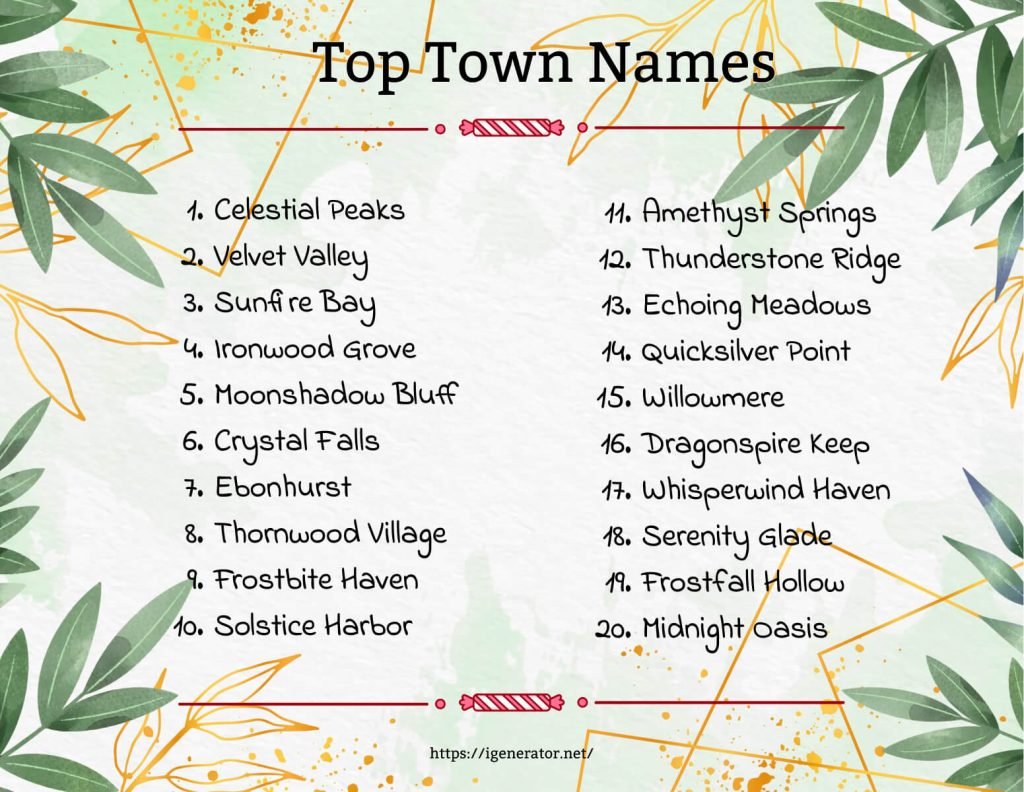
Welcome, fellow cartographers, storytellers, and dreamweavers. If you've ever stared at a blank page, grappling for that perfect name to anchor your burgeoning settlement, you know the struggle is real. A village name isn't just a label; it's a whisper of history, a hint of culture, and a cornerstone of immersion for your readers and players. In a world saturated with generic 'Stonebridge' or 'Oakhaven' locales, how do you forge a name that truly resonates? That's where powerful online tools come into play. Today, we're diving deep into the Top Online Village Name Generators Reviewed for World Builders, dissecting their strengths, weaknesses, and how to wield them like a seasoned naming artisan.
At a Glance: Crafting Your Village's Identity
- More Than a Label: A good village name enhances authenticity, immersion, and provides a foundation for lore.
- Key Naming Principles: Prioritize meaning, pronounceability, and avoid common pitfalls like redundancy or anachronisms.
- Generators as Your Allies: They're not just for random names; use them for brainstorming, breaking blocks, and exploring diverse options.
- What to Look For: Customization options (traits, genre), output variety, and ease of use are crucial.
- Beyond the Click: Refine generated names, combine elements, and always test for sound and potential unintended meanings.
- Iterate and Evolve: Naming is an ongoing process. Don't settle; keep refining until it feels just right.
The Soul of a Settlement: Why a Village Name Matters So Much
Before we embark on our generator quest, let's ground ourselves in the why. What makes a village name 'good'? Is it catchiness? Uniqueness? Both, and much more. Think of a village name as the first impression, the sonic echo of its very soul. "Riverbend" suggests geography; "Ironpeak" hints at industry or danger; "Whisperwind" evokes tranquility or hidden secrets.
A well-crafted name deepens your world's authenticity, making it feel lived-in and real. It tells a miniature story before you've written a single scene about its inhabitants. Conversely, a poorly chosen name – perhaps one that's too generic, hard to pronounce, or rife with unintended modern connotations – can yank your audience out of the experience faster than a misfired spell. According to naming experts like those at NameGenerators.com, the best village names often combine meaningful elements relevant to its personality, drawing inspiration from real-world examples, and even reflecting a unique in-world dialect. It’s not just about a random string of syllables; it’s about weaving a thread of narrative into its very essence.
The Art of Naming: What Makes a Village Name Truly Great?
Mastering the art of naming is less about magic and more about mindful consideration. While online generators can certainly help you generate unique village names, knowing what constitutes a great name empowers you to refine and select wisely.
Meaningful Elements: Weaving Lore into Lexicon
Every village has a story, a defining characteristic that shapes its identity. Perhaps it's built beside a treacherous waterfall, founded by a group of exiled miners, or known for its peculiar amber harvests. A strong name often reflects these core traits.
- Geography: Is it nestled in a valley, perched on a cliff, or beside a whispering forest? (e.g., Stonemarch, Cliffside, Whisperwood)
- History/Founding: Was it named after its founder, a significant event, or an ancient ruin nearby? (e.g., Dunstan's Folly, Battlemoore, Oldstone)
- Industry/Resource: What does the village produce or specialize in? (e.g., Silversmith, Ironforge, Grainville)
- Dominant Trait/Atmosphere: Is it peaceful, isolated, bustling, or mysterious? (e.g., Quietude, Solitude, Thrivington, Shadowbrook)
Pronounceability & Flow: The Auditory Experience
A name might look fantastic on paper, but how does it sound when spoken aloud? Clunky names are cumbersome for both you and your audience. Aim for names that roll off the tongue easily, even if they're fantastical. Test them out loud. Can your players or readers remember and repeat it without tripping over syllables? Avoid excessive apostrophes or hyphens unless they serve a distinct, in-world purpose.
Avoiding Pitfalls: The Traps of Naming
As NameGenerators.com wisely advises, there are certain common pitfalls to steer clear of:
- Overly Complicated or Anachronistic Names: A village in a medieval fantasy setting named "Cyberia Heights" probably won't fly. Likewise, names that are unnecessarily long or have convoluted spellings can be frustrating.
- Redundancy: "Riverdale-on-the-River" is, well, redundant. Let one element carry the meaning.
- Negative or Offensive Connotations: Be mindful of real-world meanings in different languages or cultural contexts. What sounds cool in one tongue might be unintentionally offensive in another. A quick search can save you a lot of headache.
- Too Generic: While 'Riverton' is fine, if every other village is also 'Forestwood' or 'Laketown,' your world starts to blend into a beige landscape. Strive for something distinctive.
Your Digital Cartographer: How Online Name Generators Help
Think of online name generators not as a shortcut to bypass creativity, but as powerful accelerators for it. They're like having a thousand brainstorming partners at your fingertips, each offering unique perspectives. When you're ready to craft the perfect settlement name, these tools become indispensable.
Brainstorming Fuel
Even the most prolific world-builder hits creative walls. Generators offer a rapid-fire burst of ideas, breaking you out of your usual naming patterns. They can present combinations you'd never have conceived on your own, sparking new avenues of thought.
Overcoming Writer's Block
Sometimes, the sheer pressure to come up with 'the perfect name' can paralyze. A generator takes that pressure off, offering a no-stakes starting point. It's easier to refine a generated name than to conjure one from thin air.
Ensuring Variety
If you find yourself repeatedly falling back on similar-sounding names, a generator can introduce an astonishing range of linguistic styles, cultural influences, and thematic elements, ensuring your world's villages feel distinct from one another.
A Starting Point, Not the End Goal
The trick to using generators effectively is to view their output as raw material. Few generated names will be perfect straight out of the box. Instead, they provide building blocks: a captivating prefix, an evocative suffix, a rhythmic flow, or a unique blend of syllables you can adapt, combine, and personalize. This iterative process is where the true magic happens.
Deep Dive: Top Online Village Name Generators Reviewed
Now, let's explore some archetypes of online village name generators you'll encounter, each with its own strengths and ideal use cases. While I can't review specific real-time websites without live access, I can analyze the types of generators available based on best practices and the ground truth provided (NameGenerators.com). These categories represent the best of what's out there.
1. The Trait-Focused Craftsman (e.g., NameGenerators.com's approach)
This type of generator isn't just about random words; it's about intelligence and context. It empowers you to input specific details about your village, and then it crafts names based on those parameters.
- Features:
- Customizable Inputs: You might define its primary resource (e.g., "silver mine," "fishing port"), its geographical location (e.g., "forest," "mountain," "river mouth"), its dominant trait (e.g., "ancient," "peaceful," "warlike"), or even a historical event associated with it.
- Contextual Output: The generated names directly reflect your chosen traits, leading to highly thematic and authentic results.
- Lore Integration: Many offer brief explanations or etymologies for the suggested names, helping you flesh out the village's backstory.
- Multiple Variations: Often provides several options per trait, allowing for nuanced selection.
- Pros:
- High Authenticity: Names feel genuinely tied to your world's lore and geography.
- Reduced Genericism: Far less likely to produce bland or unrelated names.
- Inspiration for Lore: The suggestions themselves can spark new ideas about the village's history or purpose.
- Empowers World-Builders: Puts creative control firmly in your hands, making you an active participant in the naming process. It's an excellent way to explore a wide range of village names that fit specific criteria.
- Cons:
- Requires More Input: If you don't have a clear idea of your village's traits yet, this type might feel like too much work initially.
- Potentially Slower: The generation process might take a moment longer due to complex algorithms.
- Best For: World-builders, authors, and game developers who have a well-defined concept for their village and prioritize deep immersion and internal consistency. This is for those who want their names to tell a story.
- Mini-Case Snippet: You're building a village called 'Oakwood' near an ancient, magical forest. Instead of a random name, you input "Forest," "Ancient," and "Magical." The generator returns "Eldertree Gaze," "Whispering Bough," and "Sylvanholm." Sylvanholm immediately clicks, evoking both the forest and a sense of home.
2. The Quick Randomizer: Instant Inspiration
Sometimes, you just need a name, any name, to get the ball rolling. This category of generator excels at speed and sheer volume, providing a rapid influx of diverse options with minimal fuss.
- Features:
- One-Click Generation: Usually just a button click to produce a list of names.
- Vast Database: Draws from a massive pool of linguistic patterns, suffixes, and prefixes.
- Quantity Over Specificity: Focuses on generating many names quickly, rather than hyper-specific ones.
- Pros:
- Breaks Writer's Block Instantly: Perfect for when you're completely stuck and need any starting point.
- High Volume of Ideas: You can scroll through dozens or hundreds of names in minutes.
- Surprising Combinations: Can sometimes stumble upon truly unique and unexpected names you wouldn't have thought of.
- Easy to Use: No complex forms or options, just click and go.
- Cons:
- Less Thematic: Names might not directly align with your village's traits without significant modification.
- Generic Outputs: A higher chance of generating names that feel a bit bland or forgettable.
- Requires More Editing: You'll likely need to modify or combine elements from several suggestions to find a truly fitting name.
- Best For: Initial brainstorming sessions, when you need a placeholder name, or when you want to explore a wide array of possibilities without being constrained by specific parameters. Ideal for breaking a creative rut.
- Mini-Case Snippet: You're sketching out a new region and need quick names for three small hamlets. You hit the randomizer. It gives you "Willowhollow," "Stonehaven," and "Thornfield." While "Stonehaven" feels a bit common, "Willowhollow" immediately suggests a peaceful, marshy area, and "Thornfield" evokes a tougher, more rugged place. Instant, usable placeholders!
3. The Cultural & Fantasy Weaver: Genre-Specific Flavors
For those building worlds steeped in specific fantasy tropes, historical eras, or cultural aesthetics, these generators are invaluable. They specialize in names that sound like they belong to a particular genre or setting.
- Features:
- Genre Filters: Options for "Elf Village," "Dwarf Hold," "Orc Camp," "Medieval Town," "Steampunk Settlement," etc.
- Linguistic Stylings: Incorporates prefixes and suffixes common to specific fantasy languages or historical periods.
- Atmospheric Suggestions: Names evoke the feel of the chosen genre.
- Pros:
- Highly Thematic for Specific Genres: Ensures names instantly fit the established aesthetic of your world.
- Adds Depth to Fantasy Races: Helps differentiate settlements based on their inhabitants.
- Saves Research Time: No need to deep-dive into medieval Anglo-Saxon place names if the generator does it for you.
- Cons:
- Limited Versatility: Less useful for truly unique, hybrid fantasy settings or contemporary stories.
- Can Lean into Tropes: While helpful, some outputs might feel a little too familiar for seasoned fantasy fans.
- Best For: Game Masters running Dungeons & Dragons campaigns, fantasy authors, or anyone building a world with clear, established genre conventions. This is how you find inspiring names for your locales within a specific fantasy tradition.
- Mini-Case Snippet: You're creating an elven village deep within an ancient forest. You select "Elf Village" and "Forest." The generator offers "Silvanfell," "Aeridor," and "Whisperwind Grove." Aeridor immediately sounds authentically elven, mysterious, and unique.
4. The Simple & Sweet Starter: User-Friendly and Efficient
Sometimes, less is more. These generators prioritize a clean interface and straightforward functionality, making them perfect for beginners or those who prefer a minimalist approach.
- Features:
- Intuitive Design: Very easy to navigate, often with minimal buttons or options.
- Basic Inputs (if any): Might allow for a simple choice like "Fantasy" or "Real-World inspired" but generally avoids complex forms.
- Clear Output: Names presented in an easy-to-read list.
- Pros:
- Beginner-Friendly: Ideal for those new to world-building or using generators.
- Fast and Efficient: Get names quickly without wrestling with a complex UI.
- Less Overwhelming: Doesn't bombard you with too many choices or advanced features.
- Cons:
- Limited Customization: You won't get highly specific or tailored results.
- Potentially Generic: Similar to the Quick Randomizer, the names can sometimes lack a distinct flavor.
- Best For: Users who need quick, functional names without specific requirements, or who prefer to do most of the customization manually after generation. A straightforward way to discover powerful village name options without too much complexity.
- Mini-Case Snippet: You need a generic name for a small farming community. You click the "Generate" button on a simple interface. It provides "Greenmeadow," "Harvestfield," and "Brookside." "Harvestfield" is perfect – simple, descriptive, and immediately understandable.
Beyond the Click: Advanced Naming Strategies
Getting names from a generator is just the first step. The true craft lies in what you do with those names.
Mix & Match: The Frankenstein Method
Don't be afraid to combine elements from different generated names. Perhaps you love the prefix from one and the suffix from another.
- Example: Generator A gives "Blackwood." Generator B gives "Riverton." You combine them to "Blackwood Riverton" or even "Blackriver."
Apply Real-World Etymology
Research how real places get their names. Often, it's a combination of geography, historical figures, or local features.
- Example: Many "burgh," "bury," "ton," or "ham" suffixes in English names relate to forts, towns, or homes. Incorporating similar patterns into your fictional language adds depth.
Develop Your Own Naming Conventions
For consistency across your world, consider creating your own rules. Maybe all villages in the northern kingdom end in '-hold', while those in the south use '-shore'.
- Example: North: "Ironhold," "Stonehold," "Frosthold." South: "Coralshore," "Sunken Shore."
The "Sound" Test: Read it Aloud (Again!)
Seriously, this can't be stressed enough. Read your chosen name aloud, say it in a sentence, repeat it ten times. Does it flow? Is it memorable? Does it sound good when a character says, "I'm heading to [Village Name]?" If you're looking to find that perfect village name that truly sings, this step is non-negotiable.
Common Naming Pitfalls to Sidestep
Even with the best tools, it's easy to fall into traps. Be vigilant:
- The "Too Similar" Trap: You have Stonebridge, Stoneside, and Stoneton all within a day's ride. Confusing for everyone. Use generators to diversify!
- The "Unpronounceable Mess": If you can't say it, your audience won't. Avoid excessive consonants or apostrophes that add no real phonetic value.
- The "Generic Wonderland": While functional, names like "Green Meadow" or "Oak Forest" won't make your world stand out if they're used too often without a unique twist. Aim for a balance of familiar and distinctive.
- Unintended Meanings: A name that sounds cool in your head might have an unfortunate or comical real-world meaning you didn't anticipate. A quick Google search can be a lifesaver.
FAQ: Your Village Naming Questions Answered
Q: How many names should I generate?
A: Generate as many as it takes! For a single village, you might generate 20-50 names, pick a shortlist of 5-10, and then refine. For an entire region, you might generate hundreds, categorizing and saving the best ones for future use. The goal isn't quantity, but finding the right name.
Q: What if I don't like any of the generator's suggestions?
A: Don't despair! Online generators are best used as inspiration.
- Look for elements: Did you like a prefix, a suffix, or a specific sound?
- Combine generators: Try a different generator, or take elements from one and feed them into another.
- Adjust your criteria: If you're using a trait-focused generator, try different inputs.
- Take a break: Sometimes stepping away and coming back with fresh eyes helps.
Q: Can I use real-world names or heavily inspired ones?
A: Generally, yes, with caution. Using a slightly altered real-world name (e.g., 'Londinium' becoming 'Londyn') can lend familiarity, but be mindful of intellectual property for very specific, copyrighted names (e.g., from famous fantasy series). For smaller villages, drawing from historical real-world place names (like old English or Celtic names) can add a fantastic layer of authenticity.
Q: How does naming impact my world's consistency?
A: Hugely. Consistent naming conventions reinforce the cultural and historical logic of your world. If all dwarven settlements have harsh, guttural names, and all elven villages have melodic, flowing names, it strengthens the identity of those races. Inconsistent naming can make your world feel disjointed and hastily constructed. Think of names as a subtle form of world-building shorthand.
Your Next Step: Crafting Names That Live and Breathe
Naming a village is an exciting part of world-building, offering a chance to infuse your creation with immediate character and depth. With the Top Online Village Name Generators Reviewed for World Builders at your disposal, you're now equipped with the knowledge to navigate these tools effectively.
Remember, the best names aren't just found; they're forged. Use these generators to kickstart your imagination, break through creative blocks, and provide you with a rich palette of options. Then, take those raw gems, apply the principles of authenticity and flow, and refine them until they truly sing. Your world deserves names that breathe life into its maps and resonate deeply within the hearts of those who explore it. Go forth, create, and may your villages bear names as legendary as the tales told within their walls.