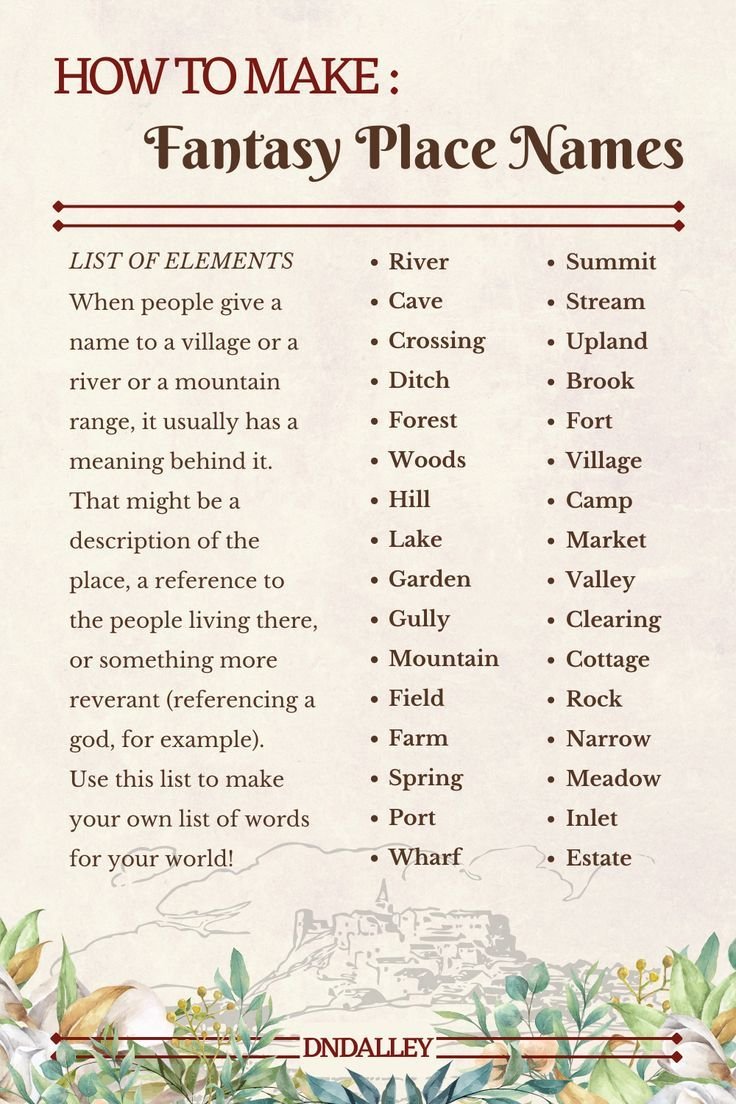
Ever found yourself staring at a blank map, the grand lore of your fantasy world brimming, but one crucial element missing? The villages. Those humble, bustling, or forgotten dots on your landscape that breathe life into your creations. Getting your Village Name Ideas by Fantasy Race & Culture right isn't just about labeling; it's about invoking history, identity, and a deep sense of place that instantly connects your audience to your world.
A well-chosen village name doesn't just sound good; it tells a story, subtly hinting at who lives there, what they value, and the very ground beneath their feet. It’s a powerful tool for immersion, proven to hook readers and players alike. In fact, a 2024 Fantasy Writers Association survey found that a staggering 78% of fantasy readers credit place names with directly impacting their immersion. And for game masters, it’s a top concern: village names are the third most searched worldbuilding topic on Reddit’s r/DMAcademy. Consistent naming conventions even correlate with a 23% increase in sales for fantasy novels, according to a 2024 Publisher’s Weekly study.
So, how do you move beyond generic placeholders and craft names that resonate? You’re in the right place. This guide will equip you with the journalist's eye for detail and the worldbuilder's strategic toolkit to forge village names as rich and memorable as your deepest lore.
At a Glance: Naming Villages Like a Pro
- Names are Immersion Engines: They anchor your audience in your world, building trust and engagement.
- History is in the Name: Most village names stem from geography, founding families, or local resources.
- Linguistic Patterns Matter: Borrow real-world suffixes (-ton, -burg, -by) for authenticity.
- Culture Defines Sound: Elves, Dwarves, and Orcs should have distinct naming conventions.
- Geography is Your Muse: Mountains, rivers, and forests should inspire names that reflect their surroundings.
- Test for Pronunciation: Ensure names roll off the tongue for better immersion and recall.
- Consistency is Key: Regional and cultural naming patterns make your world feel cohesive and lived-in.
- Tools Aren't Cheating: Use a good village name generator to spark creativity, not replace it.
The Unseen Power of a Name: Why It Matters So Much
Think about the real world: "London" isn't just a sound; it carries centuries of history, culture, and iconic imagery. The same applies to your fantasy realms. A village name, no matter how small the settlement, is a miniature narrative. It's the first hint of its people's values, their past, and their connection to the land. This immediate, subconscious connection is what makes readers and players lean in, eager to explore.
Historically, place names often had practical origins. An English village might be "Ashford" because of an ash tree near a river ford, or "Wilton" after a founder named Wil. German settlements often carry "-burg" (fortress), "-heim" (home), or "-dorf" (village), while Viking names leaned on "-by" (farm, village) or "-thorpe" (hamlet). These aren't random sounds; they are linguistic fossils reflecting centuries of development, settlement, and daily life. Leveraging these real-world linguistic patterns lends a deep, almost subconscious authenticity to your fantasy creations. It allows you to build a world that feels grounded, even when it’s filled with dragons and magic.
Building Blocks of Brilliant Village Names: Beyond the Generic
Before we dive into race-specific examples, let's lay down the foundational principles that empower all great fantasy naming. These aren't rigid rules, but rather lenses through which to view every naming decision.
Linguistic Roots: Speaking Their Language
Every culture, real or imagined, has a distinct phonetic and structural preference. A gritty, warrior culture might favor harsh consonants and short, impactful names. An ancient, mystical race could lean towards flowing vowels and longer, melodic words.
Actionable Insight: Incorporate common suffixes and prefixes inspired by real languages.
- English/Anglo-Saxon: "-ton" (settlement), "-ham" (home), "-ford" (river crossing), "-wick" (farm/trading place), "-bury" (fortified place), "-dale" (valley).
- Germanic: "-burg" (fortress), "-heim" (home), "-dorf" (village), "-hausen" (houses).
- Norse/Viking: "-by" (farm/village), "-thorpe" (hamlet), "-gard" (enclosure), "-fjord" (inlet).
- Elven (Fictional Inspiration): Often ends in "-ia," "-iel," "-eth," "-on," emphasizing lyrical sounds.
- Dwarven (Fictional Inspiration): Frequently includes "-hold," "-delve," "-peak," "-stone," reflecting their earthy, crafting nature.
History & Heartbeat: What's Their Story?
Every village has a reason for being. Was it founded by refugees fleeing war? A rich mining community? A strategic outpost? The circumstances of its establishment leave an indelible mark on its identity, often reflected in its name.
Actionable Insight: Consider the village's origin story.
- Refugee Settlement: "Hope's End," "Newhaven," "Aegis Point."
- Conquering Army Outpost: "Ironwatch," "Sentinel's Mark," "Grimhold."
- Resource Center: "Silvervein," "Oakhaven," "Fisher's Rest," "Saltmarsh."
- Founding Family: "Brightwood," "Thornborough," "Blackstone."
- Military Purpose: "Bastion Point," "Garrison," "Keepwall."
Geography's Whispers: Where Do They Live?
The landscape is a silent narrator. A village nestled high in the mountains will likely bear a name distinct from one on a windswept coast or deep within a sprawling forest. This connection to the land grounds your world in reality.
Actionable Insight: Align names with physical features.
- Mountain Villages: "Stonepeak," "Cloudridge," "High Crag," "Whisperwind Summit."
- Coastal Settlements: "Tidehollow," "Anchorport," "Seawatch," "Gull's Roost."
- Forest Villages: "Deepwood," "Sunken Grove," "Whisperleaf," "Briarwood."
- River Settlements: "Riverbend," "Fordcross," "Waterside," "Brookhaven."
- Swamp/Marsh Villages: "Mirefen," "Bogwater," "Sludgeford."
Cultural Soul: Who Are They?
Different cultures prioritize distinct elements. A society of scholarly mages might name their villages after constellations or ancient scholars, while a fierce tribal people might honor great warriors or dangerous beasts.
Actionable Insight: Reflect the culture's core values or characteristics.
- Wizard Culture: "Astral Reach," "Arcane Spire," "Lorehaven."
- Warrior Culture: "Blade's Edge," "Shieldwall," "Grimgate."
- Agrarian Culture: "Harvest Home," "Greenmeadow," "Wheatfield."
- Spiritual/Druidic: "Moonpetal," "Whispering Stones," "Elderwood."
The Sound Check: Pronounceability & Flow
A truly immersive name is one that flows naturally off the tongue. If your readers or players stumble over a name, it breaks the immersion and can lead to frustration or the adoption of unofficial, simpler nicknames.
Actionable Insight: Read your names aloud.
- Easy Pronunciation: Aim for names that are straightforward and intuitive to say.
- Reserve Complexity: Save truly complex or unique names for highly significant, ancient, or mystical locations where their difficulty adds to their mystique.
- Avoid Tongue-Twisters: Steer clear of excessive apostrophes, hyphens, or unusual consonant clusters unless they serve a very specific, deliberate cultural purpose.
Regional Harmony: A Cohesive World
Imagine a map where every village name sounds like it belongs to a different continent. It feels disjointed. Villages within the same geographic region or founded by the same culture should share linguistic patterns or thematic elements. This consistency builds a believable, lived-in world.
Actionable Insight: Create naming families.
- Example: If you have "Ironforge," nearby settlements might be "Goldforge," "Copperdelve," or "Coalhaven."
- Cultural Consistency: Elven settlements in a particular forest might all feature "Silvan" or "Whisper" in their names, while Dwarven holds in a mountain range share "Stone" or "Grom."
A Tapestry of Tongues: Village Name Ideas by Fantasy Race & Culture
Now, let’s get specific. Applying these principles to different fantasy races and cultures can unlock a rich vein of authentic, evocative names.
Humans: The Adaptable & Diverse Settlers
Humans are often the most varied race in fantasy, reflecting a spectrum of real-world cultures. Their villages can range from bustling trade hubs to secluded farming communities.
- Themes: Real-world historical influence (Medieval English, Germanic, Norse, Roman), local geography, founding figures, key resources, military outposts, religious sites. Their names often show a blend of practicality and history.
- Linguistic Patterns: Often combine a descriptive prefix (Oak, Stone, River) with a common suffix (-ton, -ham, -ford, -wick, -burg, -dale, -haven).
- Examples:
- Common/Medieval: Oakhaven, Bridgewick, Stoneford, Riverbend, Blackwood, Thistlewick, Fairmeadow, King's Landing, Ashwood, Barrowfield, Crow's Nest.
- Northern/Norse-Inspired: Helmsgard, Jorvik, Skallagrim, Frosthaven, Drifttown, Shieldgate, Ironmark.
- Southern/Romanic-Inspired: Valerius, Port Anvil, Aqualina, Terra Nova, Castellan, Via Sol.
- Tips: Human names offer the most flexibility. Don't be afraid to draw directly from real-world historical naming conventions and blend them creatively. Consider what kind of human culture founded the village. Was it a feudal kingdom, a mercantile republic, or a frontier settlement?
Elves: Ancient Grace & Nature's Whisper
Elven villages often reflect their deep connection to nature, their longevity, and their refined aesthetic. Their names tend to be melodic, elegant, and often contain references to trees, stars, rivers, or ancient lore.
- Themes: Nature (trees, leaves, stars, moon, rivers, forests), ancient wisdom, grace, light, ethereal beauty, elven language sounds (often melodic, flowing vowels, soft consonants).
- Linguistic Patterns: Suffixes like "-ia," "-iel," "-eth," "-nor," "-dale," "-glen," "-wood," "-haven." Often compound words (Whisperwind, Moonglade).
- Examples:
- High Elves: Eldoria, Aethelgard, Silverglade, Starfall, Mythrendar, Lumina, Sunstrider, Caelum.
- Wood Elves: Whisperwind, Moonglade, Rivermist, Greenbough, Silvanus, Deeproot, Thornwood, Elderthistle.
- Dark Elves (Drow, etc.): Shadowfen, Gloomdale, Whispering Caverns, Malasar, Umbraport. (Emphasize darker, more sinister natural elements or stealth).
- Tips: Focus on sounds that evoke elegance, age, and natural beauty. Use alliteration and assonance to create a musical quality. Consider what aspect of nature is most important to that specific elven subculture.
Dwarves: Stone, Stoutness, & Deep Roots
Dwarven settlements are usually hewn from rock, deep within mountains or hills. Their names are typically sturdy, guttural, and reflect their mastery of stone, metal, and craftsmanship, as well as their clan loyalties.
- Themes: Earth, stone, mountains, gems, metals, forging, deep places, clan names, strength, resilience. Names often have hard consonants and a grounded feel.
- Linguistic Patterns: Prefixes/suffixes like "Iron-," "Stone-," "Deep-," "Hammer-," "-hold," "-delve," "-peak," "-forge," "-gate," "-vein." Often compound words.
- Examples:
- Mountain Holds: Ironpeak, Stoneguard, Deepdelve, Hammerfall, Grimfang, Khazad-dûm (a famous inspiration), Silvervein, Copperholme.
- Crafting Hubs: Anvilhold, Forgestone, Geargrind (for gnomish influence), Brazier's End.
- Clan Names: Grommash, Durin's Hold, Bronzebeard Strong.
- Tips: Think robust, functional, and reflective of their craft, location, or ancestral ties. Hard consonants and short, impactful sounds work well. Names might combine a resource with a location or function.
Orcs & Goblins: Brutality, Utility, & Harsh Realities
Orcish and Goblin settlements are often pragmatic, built for defense, utility, or sheer aggression. Their names tend to be harsh, guttural, and may reflect their environment or their violent nature.
- Themes: Strength, battle, utility, harsh geography (mud, rock, slag), fear, tribal leaders, simple descriptors.
- Linguistic Patterns: Short, sharp words. Often end in hard consonants or possess an aggressive, almost barked quality. Common in fantasy to use "-gate," "-hold," "-pit," "-fang."
- Examples:
- Orcish: Skarg, Grimgate, Bloodfang, Gorok's Hold, Mudden, Slagheap, Rotpit, Blackrock, Skullcrag, Bonehollow.
- Goblin: Snikt's Burrow, Greenthroat, Rustgrind, Gloomfang, Shankton, Bogwater, Tanglefoot.
- Tips: Focus on sounds that convey strength, danger, or raw pragmatism. Names are often descriptive of a place's function (e.g., Grimgate for a grim gate) or a prominent feature. Avoid overly complex or elegant names.
Halflings & Gnomes: Cozy Comfort & Ingenious Quirks
These smaller folk often build communities that are charming, cozy, and deeply integrated with their natural surroundings (for halflings) or brimming with ingenious contraptions (for gnomes).
- Themes:
- Halflings: Comfort, food, hearth, rolling hills, rivers, agriculture, community, gentle nature. Names are often warm, friendly, and descriptive of pleasant places.
- Gnomes: Invention, gears, magic, hidden places, curious discoveries, whimsicality, often with a touch of eccentricity.
- Linguistic Patterns:
- Halflings: Gentle sounds, often "-hill," "-dale," "-brook," "-burrow," "-ford," "-shire," "-mead."
- Gnomes: Can be playful, sometimes incorporating sounds of machinery or magic, or descriptive of cleverness. "-spark," "-cog," "-whistle," "-tinker."
- Examples:
- Halfling: Greenhill, Pipkin's Dale, Hearthwood, Whisperwind Dell, Burrowfen, Bramblebrook, Goldenmeadow, Applewick, Stoutacre.
- Gnome: Cogsworth, Geargrind, Twinkleburg, Tinker's Leap, Glimmerstone, Whisperlight, Arcanespark, Wondertop.
- Tips: For halflings, think pleasant, gentle sounds linked to food, comfort, or idyllic nature. For gnomes, embrace names that suggest ingenuity, cheerful industry, or hidden wonders.
Beyond the Familiar: Crafting for Unique Cultures
What if your world features Dragonborn, Tieflings, Lizardfolk, or sentient plant beings? The same core principles apply, but your inspiration changes.
- Dragonborn: Focus on draconic sounds (hissing sibilants, hard "k" or "g" sounds), volcanic features, gems, or themes of honor and power. (e.g., Cinderfall, Scalehaven, Wyrmpeak).
- Tieflings: Names often reflect their infernal heritage (demonic-sounding words, Latin-inspired elements, names that hint at shadows or fire) or a chosen name to distance themselves from it. (e.g., Ashwick, Obsidian Gate, Tartarus Vale).
- Lizardfolk: Names might be sibilant, guttural, and reflect their swampy environment, predatory nature, or ancient, sun-worshipping traditions. (e.g., Slitherfen, Sunken Maw, Bloodscale).
- Plant-based/Fey: Names tied directly to flora, specific trees, moon cycles, ancient magic, or melodic, flowing sounds. (e.g., Bloomdell, Whispering Willow, Moonpetal Glade).
Actionable Insight: Extend the existing naming principles – reflect their unique physiology, cultural values, magical traditions, or distinctive environment. The weirder the race, the more creative license you have, but always ground it in logic.
Your Toolkit for Terrific Town Names
Crafting memorable names is an art, but you don't have to be an artistic genius to do it. There are practical tools and strategies to help.
The Power of a Village Name Generator
Sometimes, you just need a spark. A village name generator can be an invaluable brainstorming tool. Don't use it to simply copy-paste. Instead, use it to:
- Break Writer's Block: A few random suggestions can jolt your creativity.
- Explore Sound Combinations: Notice patterns or sounds you hadn't considered.
- Generate Starters: Take a part of a generated name and combine it with your own ideas. "Whisper" from one, "wood" from your mental map – "Whisperwood."
- Test Patterns: Input your desired suffixes or prefixes to see what combinations appear.
The key is to use it as a spring board, not a crutch. The best names come from intention, even if the initial spark was random.
Mixing & Matching: Hybrid Names
Don't be afraid to combine elements from different principles. A village founded by human settlers near an old elven ruin might blend both naming styles. "Elvenford" could be a human settlement named for its proximity to an ancient Elven ford. This shows the layers of history in your world.
Sound It Out: The Auditory Test
Always, always, always read your names aloud. Does it roll off the tongue? Does it sound appropriate for the race and culture? Does it evoke the right feeling? A name that looks good on paper might sound clunky when spoken, and vice-versa. Read it in character, if you're a GM, or imagine a character speaking it if you're a writer.
Cross-Referencing: A Cohesive Map
Before finalizing any name, place it on your map (even if it's just a mental one). How does it sound next to other villages? Does "Frostfang Peak" feel right next to "Sunken Grove"? Or does "Stoneforge" and "Ironhold" feel more cohesive? Ensure your names create a harmonious sonic and thematic landscape across your entire world.
Avoiding the Generic Trap: Pitfalls to Sidestep
Even with all these tools, it's easy to fall into common naming traps.
- Too Descriptive/On-the-Nose: "Forest Village," "Mountain Town," "River City." While directness can work for some utilitarian or crude cultures, it often lacks flavor and history. Add a twist: "Blackwood," "Stonepeak," "Riverbend."
- Hard to Pronounce: As discussed, names that tie the tongue break immersion. Simplicity often triumphs over exoticism for common settlements.
- Inconsistent with Culture/Geography: An elven village named "Grimgate" or a dwarven hold named "Moonpetal" would feel jarring and unbelievable. Stay true to the established characteristics of your races and environments.
- Overly Complex for Minor Locations: Not every fishing hamlet needs a name as grand and ancient as "Eldoria." Reserve the truly epic or linguistically intricate names for capital cities, ancient ruins, or places of immense magical power. A simple "Fisher's Rest" or "Muddy Creek" might be perfectly appropriate for a small, unassuming village.
- Repetitive Naming: Avoid using the same descriptive element repeatedly across your world ("Greenwood," "Greenleaf," "Greenvale"). Mix it up!
Your World, Named with Purpose
Creating compelling village names is a continuous journey of research, imagination, and refinement. It's about understanding the deep connection between a name, its history, its people, and its place in your world. By approaching naming with intention and a clear framework, you'll not only avoid common pitfalls but also infuse your creations with an unparalleled level of immersion and authenticity.
So, grab your map, consider the history of your people, and listen to the whispers of your landscape. Your next great village name is waiting to be discovered, ready to anchor your audience firmly in the vibrant reality of your fantasy world. The work you put into these small labels pays dividends in grand immersion. Go forth and name with purpose!